
Navigating Food Safety Regulations: A Comprehensive Guide for Manufacturers
The food industry operates under a web of intricate regulations aimed at ensuring the safety and quality of products. Compliance with food safety regulations is not only a legal obligation but also a critical aspect of protecting consumer health and maintaining brand reputation. Presage Analytics, a leading software solution, equips manufacturers with the tools needed to navigate and meet these regulations. In this blog post, we will discuss various food safety regulations that every manufacturer should know, and how Presage Analytics can assist in achieving compliance and enhancing quality assurance processes.
What are Food Safety Regulations?
Food safety regulations are a set of laws, guidelines, and standards implemented by governmental authorities to ensure the production, handling, and distribution of safe and high-quality food products. These regulations aim to protect consumer health, prevent foodborne illnesses, and maintain public confidence in the food industry.
Why are Food Safety Regulations important?
Food safety regulations are necessary to protect consumer health, ensure product quality, build consumer confidence, prevent food fraud and adulteration, facilitate international trade, and respond to emerging risks. These regulations establish standards for hygiene practices, ingredient quality, labeling, and handling procedures. By adhering to these regulations, manufacturers can safeguard consumer well-being, maintain product integrity, and foster trust in the food industry.
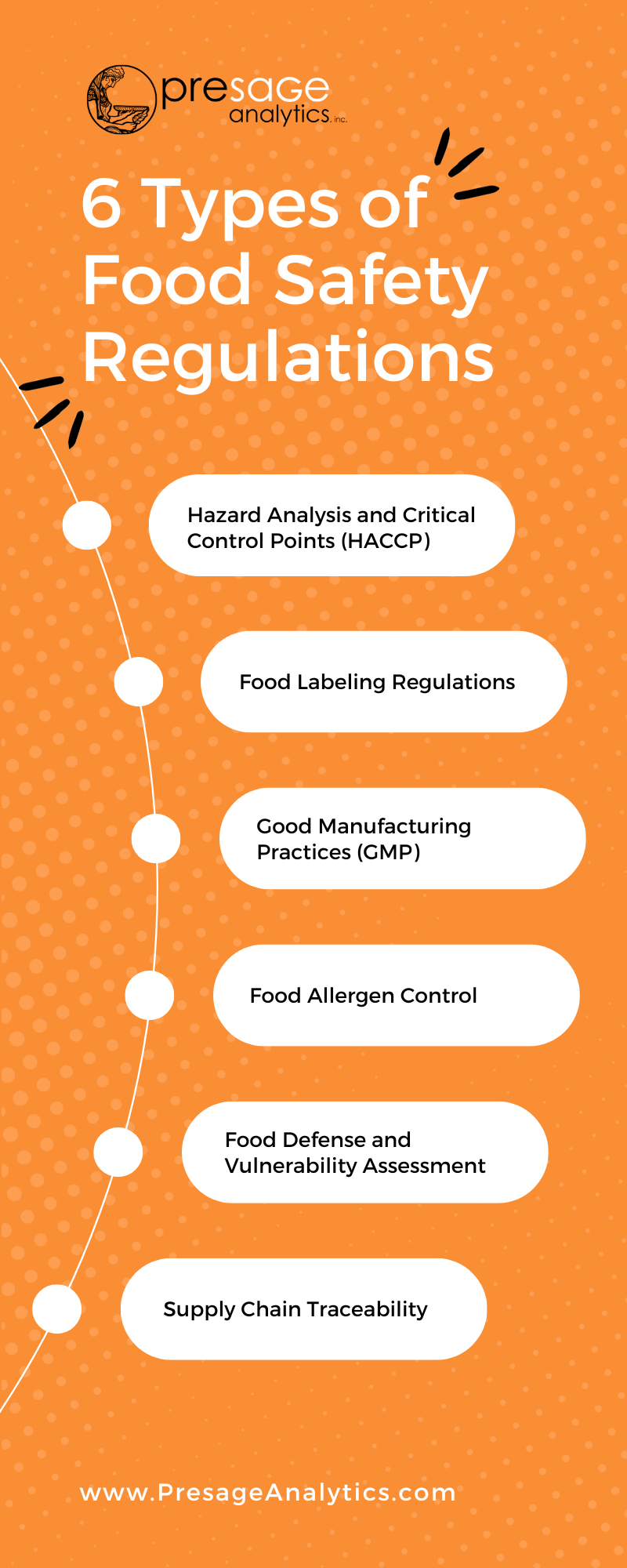
Food Safety Regulations Your Should Be Using In Your Plant
- Hazard Analysis and Critical Control Points (HACCP)
HACCP is a systematic approach to food safety that identifies, evaluates, and controls hazards throughout the production process. Manufacturers must establish and maintain a HACCP plan, which involves conducting hazard analyses, determining critical control points, and implementing monitoring procedures. Presage Analytics simplifies HACCP compliance by automating record-keeping, facilitating inspections, and enabling real-time monitoring of critical control points. - Food Labeling Regulations
Accurate and clear food labeling is vital for consumer safety and informed decision-making. Regulations govern various aspects of labeling, including allergen declarations, ingredient lists, nutrition facts, and country of origin. Presage Analytics helps manufacturers adhere to labeling regulations by providing templates, tracking label changes, and ensuring consistency across product lines. - Good Manufacturing Practices (GMP)
GMP outlines the minimum requirements for food safety and hygiene in manufacturing facilities. Compliance involves establishing sanitation protocols, proper employee training, maintenance of equipment, and documentation of procedures. Presage Analytics assists manufacturers in adhering to GMP by creating digital checklists, automating record-keeping, and facilitating inspections and audits. - Food Allergen Control
Food allergies pose a significant risk to consumer health. Regulations mandate proper allergen management, including labeling allergens, preventing cross-contamination, and providing allergen training to staff. Presage Analytics aids manufacturers in managing allergens by tracking ingredient information, ensuring proper segregation, and generating allergen reports. - Food Defense and Vulnerability Assessment
Food defense regulations focus on preventing intentional adulteration of food products. Manufacturers must conduct vulnerability assessments to identify potential risks and implement mitigation strategies. Presage Analytics streamlines the vulnerability assessment process, provides risk analysis tools, and helps implement preventive controls to safeguard against deliberate contamination. - Supply Chain Traceability
Maintaining traceability throughout the supply chain is crucial for identifying and addressing issues promptly. Regulations require manufacturers to trace ingredients, materials, and processes, ensuring quick and accurate recalls if necessary. Presage Analytics offers robust supply chain traceability features, including batch tracking, supplier management, and digital record-keeping, ensuring compliance and efficient recall management.
Does Presage Analytics work for my industry?
Presage Analytics is a versatile software solution that adapts to meet the unique safety regulations of industries such as water bottling, meat packing, fig drying, and more. With customizable features, it streamlines safety and quality assurance processes specific to each industry. Whether monitoring water quality, implementing sanitation practices, or ensuring proper drying and storage conditions, Presage Analytics helps achieve regulatory compliance, enhance quality assurance, and maintain high safety and quality standards.
By leveraging the power of Presage Analytics, manufacturers of all industries can confidently comply with food safety regulations and ensure the safety and quality of their products. Stay ahead of the regulatory landscape with Presage Analytics and prioritize consumer well-being in your manufacturing practices. Contact our Sales team to schedule a demo today and learn even more.